
Introduction
If you use AePS cash withdrawal, you have a Business Correspondent (BC) outlet, or you often carry out transactions on the basis of Aadhaar, then there is a change that you need to know now.
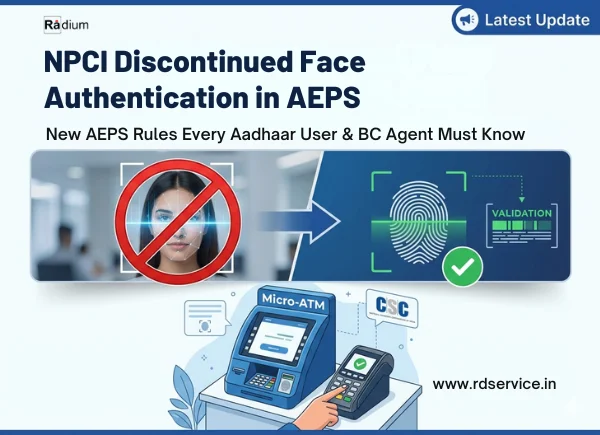
The NPCI face authentication update has led to a significant change in the manner in which AEPS transactions are processed in India. Cash withdrawals with face authentication are no longer permitted by NPCI for AEPS and Aadhaar Pay services due to increased cases of fraud.
There are lots of confusions among users:
-
What is the reason face authentication is turned off?
-
Is AEPS effective?
-
How can cash withdrawals continue?
-
What are the devices now needed?
In this article we will discuss about the NPCI latest update on AEPS in an easy way. By the end of this article, you will certainly know the new rule, its impact on you, and what you need to do right now.
What Is AEPS and Why It Matters
Before discussing the new rule, let’s quickly understand AEPS.
NPCI AePS (Aadhaar Enabled Payment System), enables banking transactions to be made with Aadhaar authentication rather than debit cards or OTPs.
Using AEPS, users are able to:
-
Withdraw cash
-
Check balance
-
View mini statement
-
Make Aadhaar Pay transactions
-
Conduct simple banking in rural and semi-urban areas.
It provides immensely to financial inclusion since people do not have to visit a branch to access banking.
NPCI Face Authentication Update — What Has Changed?
According to the NPCI latest update, there is a clear statement:
👉 Face authentication for AEPS cash withdrawal and Aadhaar Pay services has been discontinued.
Why Was Face Authentication Disabled?
Face authentication was implemented earlier by NPCI to make transactions simpler. But this method was abused by fraudsters.
Some of the common risk of frauds were:
-
Fake facial recognition.
-
Photo/video spoofing.
-
Unauthorized withdrawals
-
Identity misuse
NPCI terminates face authentication in the high-risk transactions such as cash withdrawal to protect both customers and the banking agents.
Where Face Authentication Is Now Banned
According to the NPCI AEPS new rule, face authentication will NOT work for:
-
AEPS cash withdrawal
-
Aadhaar Pay transactions
This is applicable in several AEPS platforms.
AEPS Applications Affected
Face authentication has been turned off in:
-
Digipay Lite
-
Spice Money
-
Pay Nearby
Additionally:
-
Aadhaar FaceRD is also not working for Face Authentication to withdraw cash.
This is why your transactions are failing, in case you are checking on your NPCI face authentication update status.
Where Face Authentication Is Still Allowed
The update does not completely remove face authentication.
It may still be applied to low risk services like:
-
Cash deposits
-
AEPS balance check
-
Mini statement services
-
Some verification processes
Therefore, the AEPS services remain same, but the face authentication method has changed.
New Rule for AEPS Cash Withdrawal
As per the NPCI latest update on AEPS Aadhaar transactions, users are required to use:
✅ Fingerprint biometric device or ✅ Iris authentication device
Cash withdrawal transactions will no longer be completed through face authentication. This implies that biometric equipment is now a mandatory requirement to BC agents and serious AEPS operators.
Why Biometric Authentication Is Safer
You may ask yourself-- why go back to fingerprints?
Because biometric authentication offers:
-
Live identity verification
-
Higher accuracy
-
Reduced fraud risk
-
UIDAI-certified security standards
Fingerprint or iris data are not subject to easy copying or misuse as compared to facial recognition. This is why NPCI made this decision to save both the agents and the customers.
List of Approved Biometric Devices for AEPS
Choosing of the right device is more critical than ever. The following are the most trusted biometric devices that can be used to carry out AEPS transactions with the requirements of the NPCI and UIDAI.
Suggested AEPS Biometric Devices.
These devices support:
-
AEPS cash withdrawal
-
Aadhaar Pay services
-
AEPS balance check
-
Aadhaar e KYC online verification
BC agents in India widely use them due to their stability in performance and secure authentication. In case you are already using face authentication, the next step would be to upgrade to a biometric device.
Impact on BC Agents and Retailers
The new update of NPCI AEPS primarily impacts:
-
Business Correspondent agents
-
CSC operators
-
Micro ATM operators
-
Aadhaar Pay merchants
What Changes for Agents?
Previously, agents were able to update transactions via the NPCI face authentication update app. Now:
-
Withdrawals based on Face authentication will not work.
-
Biometric authentication is mandatory.
-
Device availability directly impacts income.
In simple words we can say, no biometric device is = to no AEPS cash withdrawal service.
How to Continue AEPS Transactions Smoothly
The following steps are basic action plan.
Step 1: Get a Certified Biometric Device
In case you do not have one, buy UIDAI verified devices through the RD Service platforms or radiumbox.com.
Step 2: Complete NPCI KYC Update Online
Make sure that your agent account is completely verified.
You should check:
-
Aadhaar e KYC online status
-
Bank mapping with NPCI
-
AEPS registration validity
A quick E KYC online verification will help to avoid refusal of transactions.
Step 3: Update RD Service and Drivers
Install the latest:
-
Device drivers
-
RD Service software
-
AEPS application updates
Authentication errors are usually caused by outdated software.
NPCI Face Authentication Update Online — Frequently Asked Questions by the User.
Now Let us discuss some confusion that users have at the moment.
Is AEPS Closed?
No, AEPS is fully operational. Only face authentication for cash withdrawals has been removed.
Can I Do AEPS Balance Check Without Biometric?
Yes, Face authentication can also be used to authenticate balance inquiry and mini statement services depending on the application.
Why Is My AEPS Withdrawal Failing?
Most likely reasons:
-
Using face authentication
-
No biometric device attached.
-
Missing NPCI KYC update.
-
RD Service not updated
Is Aadhaar e KYC Still Valid?
Yes, Aadhaar e KYC online services proceed as usual.
You can still do:
-
eKYC update
-
Account verification
-
Identity validation
AEPS Registration and Compliance Tips
These are the best practices that you should follow in case you are launching AEPS services or reopening your outlet. In case of New AEPS Registration.
Make sure you have:
-
Aadhaar linked bank account
-
Active mobile number
-
Certified biometric device
-
Updated RD Service software
-
Completed NPCI mapping
Proper registration maintains smooth AEPS balance check and withdrawal operation.
Real-Life Example: What This Update Means
Just imagine like this, a rural customer who comes to a BC shop to withdraw ₹3,000.
Earlier:
-
Face authentication was used by the agent.
-
Transaction completed quickly.
Now:
-
Face authentication fails.
-
Fingerprint authentication required.
-
Transaction completes securely.
The verification process has changed, but the method it remains the same.
Tips to Avoid AEPS Transaction Problems
To ensure a smooth operation:
-
Always use certified biometric devices
-
Avoid unofficial apps
-
Regularly update AEPS software
-
Perform periodic E KYC online checks
-
Check NPCI mapping status.
-
Train employees with the new AEPS rules
These minor steps will stop big service failures.
Video Guide for Choosing the Right Device
To have a quick visual explanation of the biometric devices and their functionality with AEPS services, check out this short guide:
This assists agents to know the device that best fits their daily transaction requirements.
Key Takeaways
-
NPCI has discontinued face authentication for AEPS cash withdrawal.
-
Aadhaar Pay is now mandated to be fingerprint or iris authenticated.
-
Balance inquiry and mini statement can still be done by face authentication.
-
Affected apps include Digipay Lite, Spice Money and Pay Nearby, etc.
-
BC agents now need certified biometric devices.
-
NPCI KYC and Aadhaar e KYC updates are still on.
-
The services of AEPS remain the same - only the rules of authentication have been modified.
Conclusion
An important step toward safer online banking in India is the NPCI face authentication update. Customers, agents, and the entire AEPS ecosystem will eventually be protected from fraud, despite the change's initial inconvenience. Security standards change, and technology changes. With the option of certified biometric devices and keeping your systems up-to-date, you can still provide fast and reliable AEPS services without interruption. When you are part of the AEPS ecosystem, this update is not a problem to you, but rather an upgrade to safer transactions. Keep informed, keep in step and keep your AEPS services operating effectively.
Disclaimer: The information is provided on the basis of NPCI standards. To keep up with changes, always confirm the information at npci.org.in and do not ignore guidelines with your service provider.


