
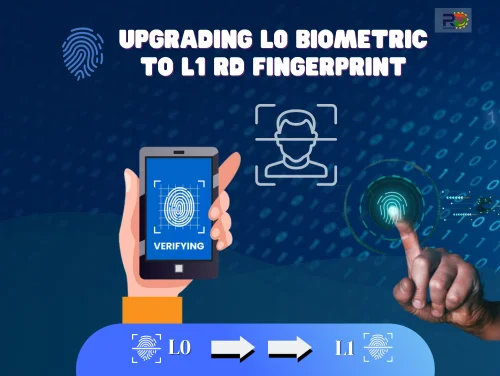
L0 biometric finger authentication devices have been upgraded to the advanced L1 RD fingerprint scanner technology.
In the ever-evolving landscape of biometric technology, the transition from L0 Biometric to the advanced L1 RD Fingerprint promises to be a game-changer. This blog explores the reasons behind this upgrade.
UIDAI has implemented a significant update, rendering L0 Biometric RD Devices non-functional in key Aadhar Authentication Applications like AEPS, eKYC, and Attendance.
The existing deployed fingerprint L0 RD devices will undergo a phased withdrawal from the authentication ecosystem. To ensure a smooth transition, it has been determined that the use of all current fingerprint L0 RD devices will cease by June 30, 2025. Subsequently, only fingerprint L1 RD devices will be permitted for Aadhaar-based authentications.
- The utilization of the L1 Capacitive sensor, known for its superior performance, promises a significant reduction in rejection rates compared to the older L0 Optical sensor.
- This advanced technology offers faster and more accurate biometric readings, ultimately leading to fewer instances of biometric rejection or mismatching for users.
L1 fingerprint authentication stands as a robust and secure authentication method, seamlessly integrated into end-user devices. Its primary application encompasses high-throughput content services, including but not limited to banking, smart card data management, password updates, and stock and finance administration. Embracing the future of online service access, this technology paves the way for multifaceted user authentication, particularly in scenarios where multiple users need access to the same data.
Distinguishing itself from other fingerprint scanners, the L1 fingerprint scanner boasts a unique capability. Despite its compact capture area, it excels at extracting intricate details from fingerprints. Beyond capturing the fingerprint's curves and ridges, L1 sensors precisely identify the location of pores. With a design that prioritizes both user-friendliness and global security, this technology is poised to revolutionize blockchain exchanges, biometric payment card transactions, and cross-device lock applications.
Distinguishing Characteristic:
The L1 fingerprint reader possesses a unique trait that differentiates it from other biometric device categories. In contrast to its counterparts, which rely on both software and hardware components, the L1 fingerprint reader operates independently, eliminating the need for specific software driver support. This self-sufficiency enhances its reliability and security compared to other biometric authentication standards that necessitate both hardware and software dependencies.
Conclusion:
The transition from L0 Biometric to L1 RD Fingerprint signifies a significant stride in biometric technology. Its enhanced accuracy, security, and versatility are reshaping industries and applications, making it a cornerstone in the future of secure digital interactions. As we witness this transformation, the world of biometrics is becoming more accessible, efficient, and secure than ever before.


